TIA Peony Prism Acropora Colony (cut to order) • Local Pickup (Long Island, NY) or Overnight Shipping

Skip to product information
1 of 1

Coral Type: SPS

TIA Corals

TIA Peony Prism Acropora Colony (cut to order)

TIA Peony Prism Acropora Colony (cut to order)

Regular price $299.99 USD
Regular price Sale price $299.99 USD
Sale Sold out
Shipping calculated at checkout.
Quantity

About the Coral Image
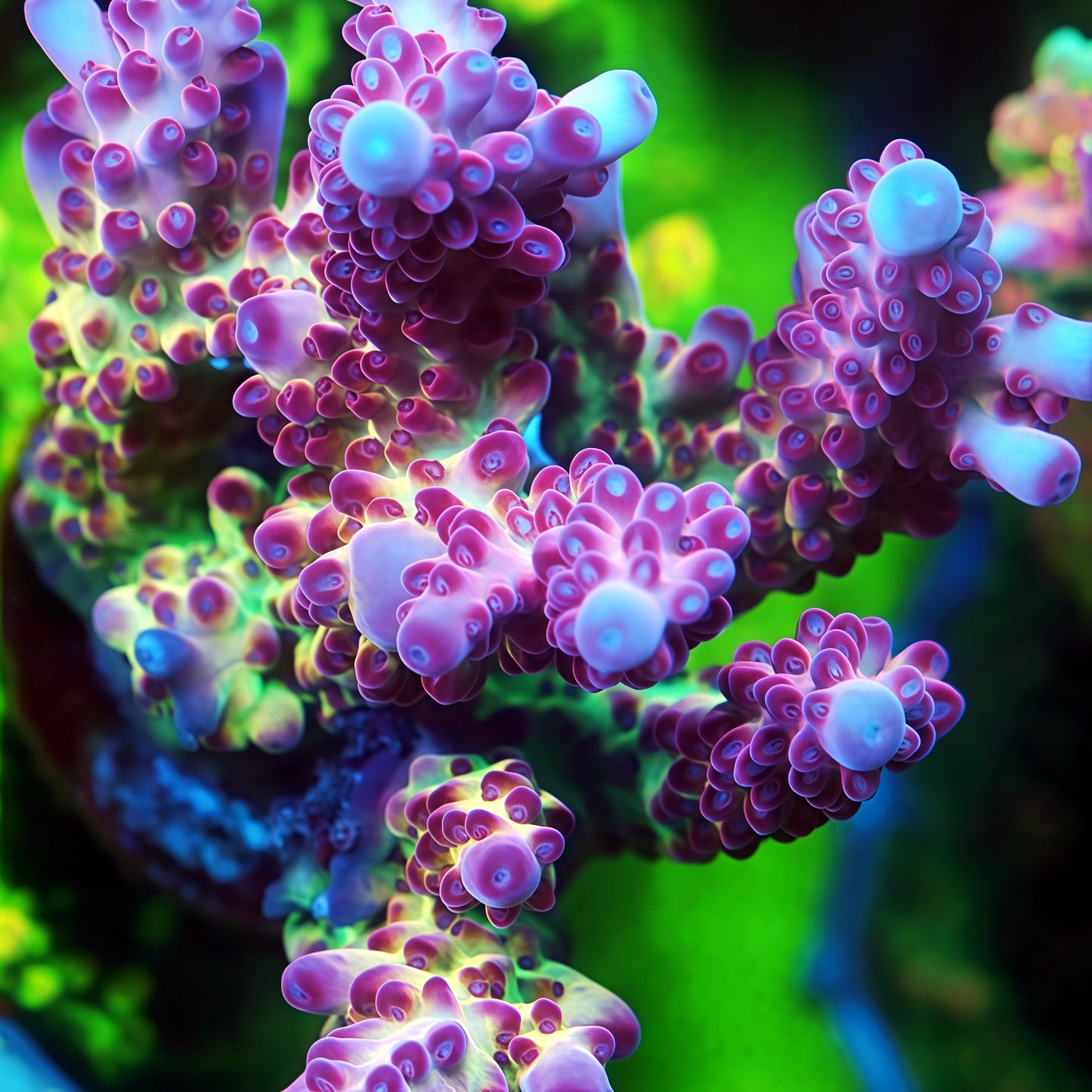
Photos taken under Actinic Radion Mobius (100% UV, 100% Violet, 100% Royal, 20% Blue) using Canon 90D + EF-S 60mm f/2.8 Macro. Color may vary under different lighting.

Size: 1"+

A Word of the Coral
Peony Prism blooms with layered petals of color: a magenta-rose body brushed in lavender, finished with cool ice-blue tips. Under actinic light the corallites catch rainbow edges like facets on cut glass, while a soft lime glow at the base adds contrast. It’s floral at a glance, crystalline up close—refined, bright, and camera-ready without screaming for attention.


Name: Peony Prism
Type: Acropora Tenuis
Coloration: Magenta-rose branches with lavender polyps, ice-blue axial tips, and subtle lime undertones at the base
Style: Floral, prismatic, modern—petal-like corallites with gemstone sheen
Growth: Compact, rounded branching; stacked corallite crowns; medium polyp extension
Lighting & Flow: Moderate–high PAR (250–350) to retain blue tips; randomized steady flow for smooth polyp texture and clean structure
Origin: Grown in TIA’s legacy display tank,hand-fragged for limited release

Fresh Cut Healing: Fresh-cut frags usually require about 1-2 weeks of recovery to ensure they are healthy and safe to ship. We prioritize coral health before shipment.

Coral Quick Facts

  • Type: SPS
  • Care Level: Advanced
  • Light: High
  • PAR Guidance: PAR 250-450
  • Flow Style: Strong, random, high turnover
  • Placement Zone: Upper reef crest with stable alkalinity and nutrients
  • Behavior: Sensitive to swings; can RTN/STN under instability.
  • Compatibility: Allow room for branch growth and avoid coral warfare zones.
  • Feeding: Mostly photosynthetic; occasional amino/coral food can support color.

Low stock: 5 left

View full details
1 of 3